
Road trips with dogs sound dreamy.
Windows down.
Tail wagging.
Your dog sitting happily in the backseat.
You stopping for cute photos on the way.
But real dog travel can also look like this:
Your dog is panting.
Refusing water.
Drooling too much.
Getting restless.
Jumping from seat to seat.
Or staring at you like, “Where exactly are we going and why was I not informed?”
The good news is, road trips can be made much easier for your dog with a little planning. let Kukky show you how, the goal is simple: keep your dog calm, comfortable, hydrated, safely secured, and fed properly.
Here’s how to do it.
1. Start Preparing Before the Trip
A calm road trip starts before the car even moves.
If your dog is not used to car rides, do not make their first proper ride a 6-hour trip. Start with short drives around your area. Let them slowly understand that car rides are normal and not always linked to the vet.
Take them for:
- 5-minute drives
- Short market runs
- Small café visits
- Nearby park trips
- Calm evening drives
This helps your dog build confidence inside the car.
Also, keep your energy calm. Dogs pick up human energy very quickly. If you are panicking, rushing, or shouting while packing, your dog may also become anxious before the trip even begins.
2. Take Your Dog for a Walk Before Leaving
Before starting the road trip, take your dog for a proper walk.
Let them:
- Pee
- Poop
- Sniff around
- Release extra energy
- Stretch their body
A tired and relieved dog is usually calmer in the car.
Do not over-exercise them, especially in hot weather. Just a good walk is enough to help them settle better during the journey.
3. Do Not Feed a Heavy Meal Right Before Travel
This is one of the most important travel rules.
Avoid giving your dog a full heavy meal right before the road trip. A full stomach during movement can make some dogs uncomfortable or nauseous.
A better option is:
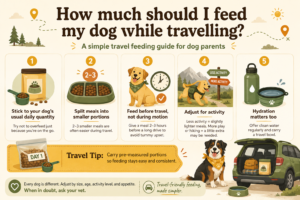
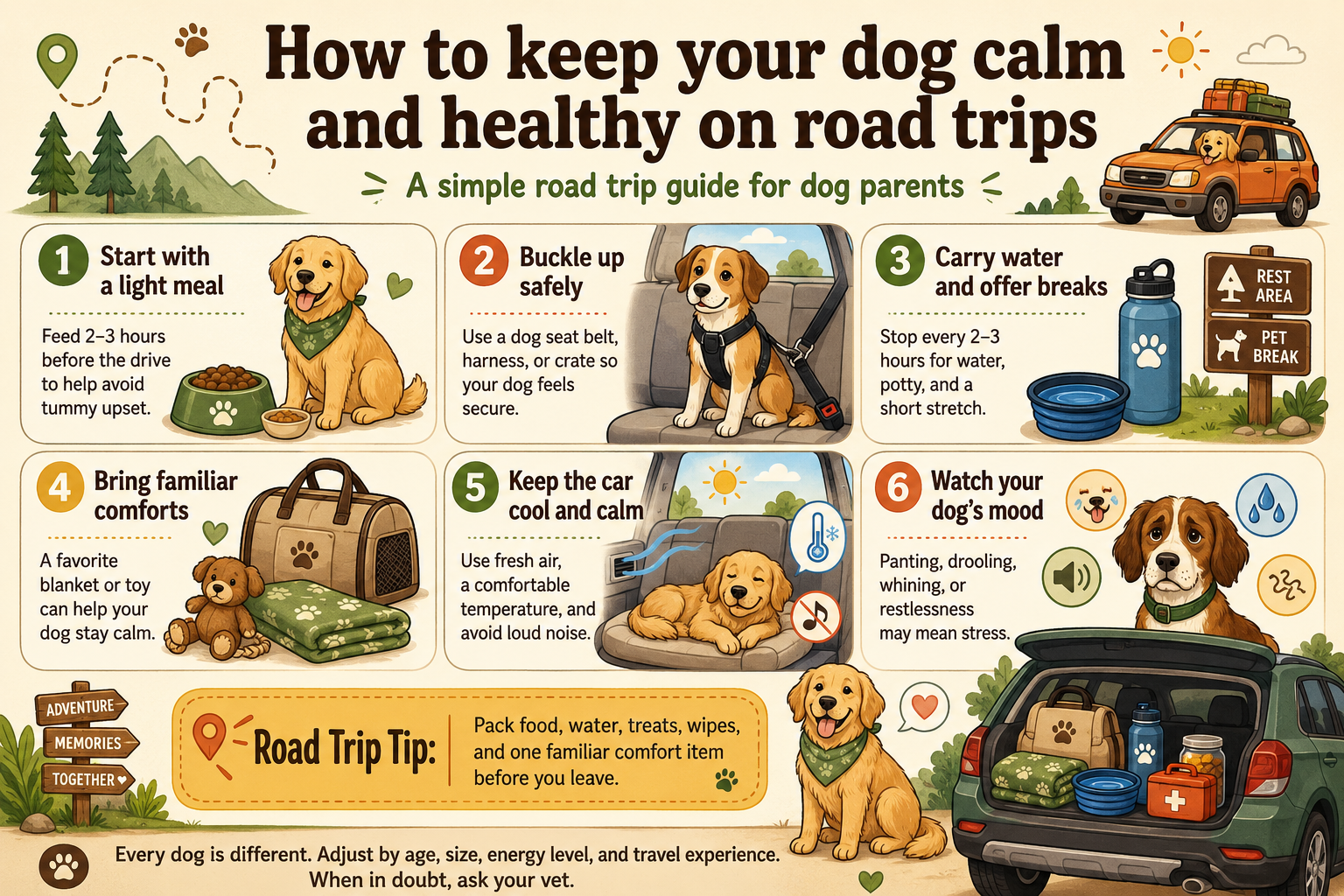
Feed a light meal 3–4 hours before leaving.
During the journey, offer small portions only during breaks. Avoid feeding your dog while the car is moving.
Once you reach your destination and your dog has settled, you can feed the remaining meal.
4. Keep Water Available, But Offer It Smartly
Hydration is very important during road trips.
Many dogs drink less water during travel because they are excited, anxious, distracted, or uncomfortable in a new environment.
Carry:
- Fresh drinking water
- A travel bowl
- Extra water for hot weather
- Napkins or towels
- A small mat for feeding breaks
Offer small amounts of water during stops. Do not force your dog to drink too much at once, especially right before getting back into the car.
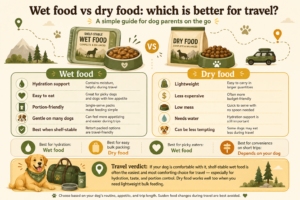
Wet food can also help support moisture intake, especially for dogs who drink less water while travelling.
5. Use a Safe Car Setup
Your dog should not be moving freely inside the car.
It may look cute when dogs roam around the backseat, climb into the front seat, or put half their body out of the window — but it is not safe.
Use one of these:
- Dog seat belt
- Travel harness
- Pet car seat
- Travel crate
- Backseat hammock with restraint
This keeps your dog safer and also reduces overstimulation. A secured dog usually settles better because they have a fixed space.
Avoid letting your dog hang their head out of the window for long periods. Dust, insects, wind pressure, and sudden braking can be risky.
6. Create a Familiar Travel Corner
Dogs feel calmer when they have familiar smells around them.
Carry something that smells like home:
- Their blanket
- Favourite toy
- Chew toy
- Small bed
- Your old T-shirt
- Their usual bowl
This gives them comfort in an unfamiliar setting.
You can create a small “dog corner” in the backseat where they know this is their place to relax.
7. Take Regular Breaks
Do not expect your dog to sit quietly for hours without a break.
For most dogs, a short break every 2–3 hours works well. Puppies, senior dogs, and anxious dogs may need more frequent stops.
During breaks, let your dog:
- Walk a little
- Pee or poop
- Drink water
- Stretch
- Calm down
- Eat a small portion if needed
Always keep your dog on leash during breaks, even if they are well-trained. New places, loud sounds, traffic, and unfamiliar smells can make even calm dogs behave unpredictably.
8. Keep the Car Temperature Comfortable
Dogs can overheat quickly, especially in Indian weather.
Keep the car well-ventilated and comfortable. Avoid direct harsh sunlight for long hours. Use sunshades if needed.
Never leave your dog alone in a parked car, even for a few minutes. The temperature inside a car can rise very fast and become dangerous.
Signs your dog may be overheating include:
- Heavy panting
- Excessive drooling
- Restlessness
- Weakness
- Bright red gums
- Vomiting
- Confusion
If you notice these signs, stop safely, cool your dog down gradually, offer water, and contact a vet if needed.
9. Watch for Travel Anxiety
Some dogs love road trips. Some dogs tolerate them. Some dogs genuinely get anxious.
Signs of travel anxiety include:
- Whining
- Shaking
- Panting
- Drooling
- Pacing
- Barking
- Trying to escape
- Refusing food
- Clingy behaviour
To calm your dog, try:
- Speaking in a calm voice
- Keeping the music soft
- Avoiding sudden loud sounds
- Giving them their familiar blanket
- Keeping them secured
- Taking regular breaks
- Rewarding calm behaviour
Do not scold your dog for being anxious. They are not being dramatic. They are simply uncomfortable and trying to understand what is happening.
10. Carry Travel-Friendly Food
Food can make or break a road trip.
Avoid carrying food that can spoil easily, leak, smell too strong after opening, or need complicated preparation.
For road trips, your dog’s food should be:
- Easy to carry
- Easy to serve
- Nutritious
- Familiar
- Shelf-stable
- Gentle on digestion
- Convenient during breaks
This is where ready-to-eat wet food can be very useful.
Kukky’s retort-packed wet meals are made for modern pet parents who want convenience without compromising on quality. They are shelf-stable, travel-friendly, ready-to-eat, and made with real ingredients.
No cooking.
No refrigeration needed until opened.
No meal prep drama.
Just cut, open, and serve.
That makes them practical for road trips, hotel stays, weekend getaways, pet boarding, and emergency backup food.
11. Do Not Introduce New Food on Travel Day
This is a common mistake.
Never introduce a completely new food on the day of travel. If your dog’s stomach does not accept it well, you may end up dealing with loose motions, vomiting, or discomfort during the trip.
Introduce travel food a few days before the journey.
Let your dog try it at home first. Check if they like it and digest it well. Once you know it suits them, it becomes much safer to carry during travel.
12. Pack a Dog Travel Kit
A good travel kit saves you from last-minute panic.
Pack these essentials:
- Dog food
- Extra food for delays
- Water bottle
- Travel bowl
- Leash and collar
- Harness or seat belt
- Poop bags
- Tissues or wipes
- Towel
- Favourite toy
- Blanket
- Basic medicines
- Vet prescription, if any
- Vaccination records
- Tick and flea protection
- Emergency vet contact
Also carry a little extra food. Travel plans can change, and finding your dog’s regular food on the way may not always be possible.
13. Keep Your Dog’s Routine as Normal as Possible
Dogs feel safer with routine.
Even while travelling, try to keep a few things familiar:
- Similar meal timing
- Same food
- Same bowl if possible
- Regular potty breaks
- Usual walk pattern
- Familiar sleeping setup
A road trip is already a big change. The more familiar things you can maintain, the calmer your dog will feel.
14. Be Careful With Medicines and Calming Products
Do not give your dog human medicines or random calming tablets before a road trip.
If your dog has severe motion sickness or anxiety, speak to your vet before travelling. Your vet may suggest safe options depending on your dog’s age, weight, health, and travel duration.
Avoid experimenting during travel. With dogs, “let’s just try” can become a problem very quickly.
15. Let Your Dog Settle After Reaching
Once you reach your destination, give your dog time to adjust.
Do not immediately expect them to eat, play, or behave normally. Let them sniff around, drink water, rest, and understand the new place.
Set up their food and water area. Place their blanket or bed in a quiet corner. Feed them only after they look settled.
Some dogs take 10 minutes. Some take a few hours. That is okay.
Final Thoughts
A calm and healthy road trip with your dog is not about doing something fancy.
It is about basics done well.
Secure them safely.
Feed them lightly.
Keep them hydrated.
Take regular breaks.
Carry familiar things.
Watch their body language.
And choose travel-friendly food that makes your life easier.
Your dog does not need a perfect vacation plan.
They just need to feel safe, comfortable, and close to you.
And when their tummy is happy, their space feels familiar, and you are calm, the road trip becomes easier for both of you.
Because for your dog, the best part of the trip is not the destination. It is travelling with you.