
Travelling with your dog is fun, but feeding during travel can quickly become confusing.
Should you carry dry food because it is easy?
Should you carry wet food because it is more filling and hydrating?
What if your dog refuses food outside home?
What if the food spills, spoils, or becomes difficult to serve?
The truth is: both wet food and dry food can work during travel, but the better option depends on your dog’s eating habits, digestion, travel duration, and convenience.
For many pet parents, wet food becomes a more practical and comforting option during travel, especially when it is ready-to-eat, shelf-stable, and packed in easy single-serve portions.
Let’s compare both properly.
Why Food Choice Matters During Travel
Dogs do not always behave the same way while travelling.
Some dogs get excited.
Some become anxious.
Some refuse to eat.
Some drink less water.
Some may get an upset stomach if their routine changes suddenly.
That is why travel food should be:
- Easy to digest
- Easy to carry
- Easy to serve
- Familiar to your dog
- Safe without complicated storage
- Mess-free as much as possible
- Nutritious enough to replace a proper meal
Changing your dog’s food suddenly during a trip is not a great idea. So whatever you choose, try to introduce it before your travel date.
Wet Food for Travel
Wet food is moisture-rich dog food that usually comes in pouches, trays, or cans. It contains more water than dry kibble and often has a softer texture and stronger aroma.
Benefits of Wet Food During Travel
1. Better Hydration Support
Many dogs drink less water while travelling. New places, excitement, anxiety, or long car rides can reduce their water intake.
Wet food naturally contains more moisture, which can help support hydration through food.
This is especially useful during:
- Road trips
- Summer travel
- Hotel stays
- Long drives
- Pet boarding
- Outdoor plans
- Weekend getaways
Wet food does not replace drinking water, but it can help when your dog is not drinking enough.
2. More Appealing for Fussy Dogs
Some dogs become picky while travelling. They may ignore dry kibble because the environment feels unfamiliar.
Wet food usually smells stronger and tastes more exciting for dogs, making it easier to encourage them to eat.
If your dog refuses meals outside home, wet food can be a better travel companion.
3. Easier to Serve as a Complete Meal
Good quality wet food can work as a proper meal, not just a topper.
For example, Kukky’s retort-packed wet meals are ready-to-eat. You simply cut, open, and serve. No cooking, no mixing, no complicated preparation.
This makes wet food useful for:
- Car journeys
- Hotel rooms
- Homestays
- Pet-friendly cafés
- Boarding stays
- Emergency backup meals
4. Softer and Easier to Chew
Wet food is softer than kibble, which can be helpful for:
- Senior dogs
- Small breeds
- Dogs with dental sensitivity
- Dogs who prefer soft textures
- Dogs recovering from stress or travel tiredness
During travel, comfort matters. A familiar, soft meal can help your dog settle better.
5. Travel-Friendly When Packed Well
One common myth is that wet food is not travel-friendly.
That may be true for homemade cooked food that needs refrigeration. But retort-packed wet food is different.
Kukky meals are shelf-stable, ready-to-eat, and do not need refrigeration until opened. That makes them easier to carry during trips compared to homemade meals.
You can pack only the number of pouches you need and serve fresh portions during the journey.
Things to Keep in Mind with Wet Food
Wet food should be handled properly.
Once opened, it should be consumed soon or refrigerated if there is any leftover. During travel, single-serve packs are more convenient because they reduce wastage and storage issues.
Also, wet food can be slightly messier than dry food, so always carry:
- A bowl
- Tissues or napkins
- A spoon
- Waste bags
- A mat or newspaper
Dry Food for Travel
Dry food, commonly known as kibble, is often considered easy for travel because it is lightweight, dry, and simple to pack.
Benefits of Dry Food During Travel
1. Easy to Carry
Dry food is lightweight and does not need special handling. You can pack it in an airtight container or zip-lock bag.
For long-distance travel, this can be convenient.
2. Less Messy
Dry food is usually less messy than wet food. It does not spill like gravy-based food and is easier to clean if dropped.
This can be useful during:
- Flights
- Train journeys
- Quick stops
- Short car rides
- Outdoor feeding
3. Longer After Opening
Dry food can last longer after opening compared to wet food, as long as it is stored properly in an airtight container.
This makes it easier when you do not know your exact feeding schedule.
Things to Keep in Mind with Dry Food
Dry food has much lower moisture than wet food. So if your dog drinks less water during travel, dry food alone may not be the best option.
Some dogs also become bored with kibble while travelling, especially if they are stressed or distracted.
Dry food can also feel heavier on the stomach for some dogs if fed in large quantities before a car ride.
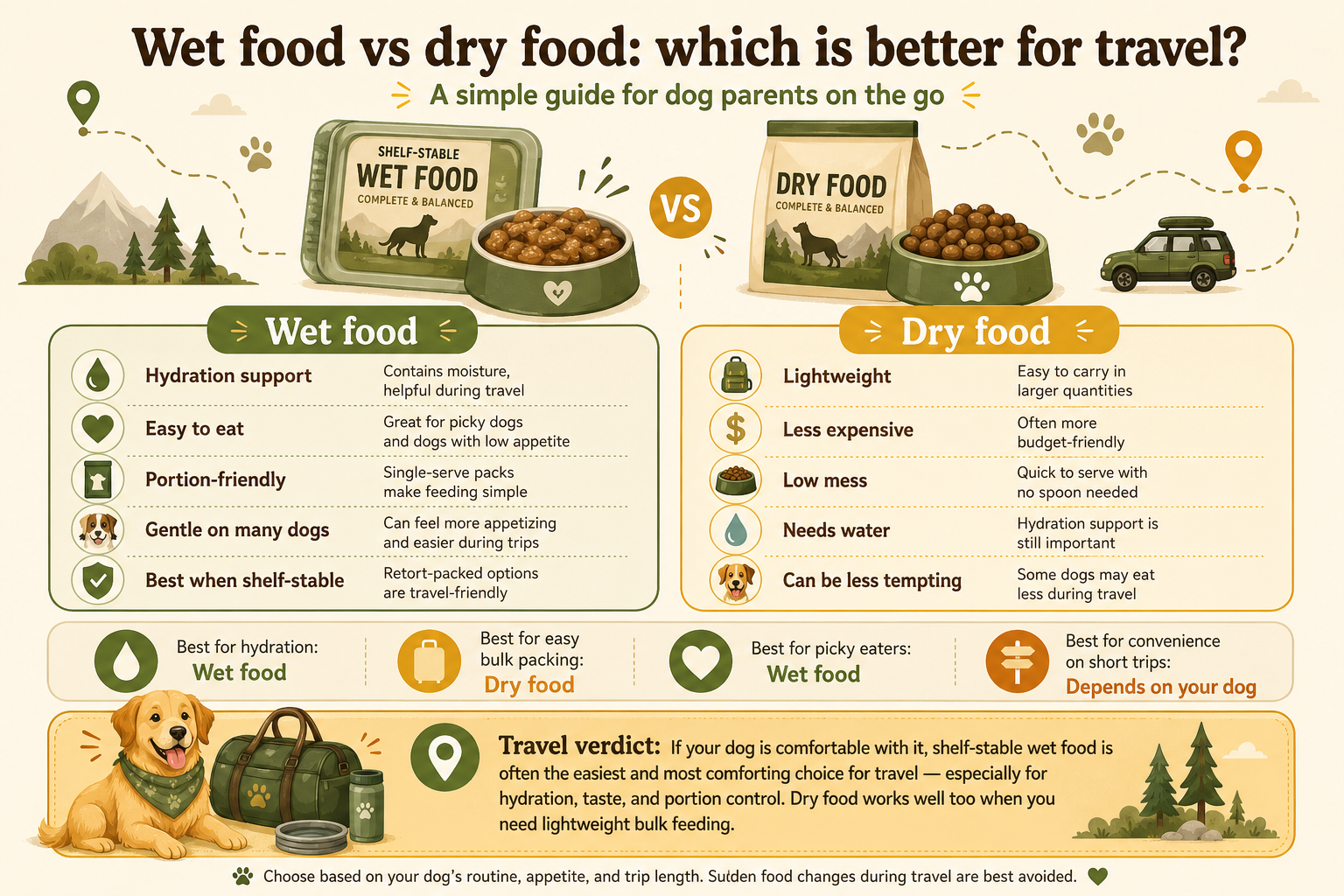
Wet Food vs Dry Food: Travel Comparison
| Factor | Wet Food | Dry Food |
|---|---|---|
| Hydration support | Better | Low |
| Taste appeal | Usually higher | Depends on dog |
| Ease of carrying | Good if pouch-packed | Very easy |
| Mess level | Slightly messier | Less messy |
| Storage after opening | Needs care | Easier |
| Good for fussy dogs | Yes | Sometimes |
| Good for long road trips | Yes, especially single-serve packs | Yes |
| Good as emergency meal | Yes | Yes |
| Comfort for dogs | High | Moderate |
| Convenience | High if ready-to-eat | High |
So, Which Is Better for Travel?
For travel, wet food is often better when your priority is hydration, taste, comfort, and proper meal satisfaction.
Dry food is better when your priority is lightweight packing, less mess, and longer storage after opening.
The best option for many pet parents is a balanced travel plan:
Carry wet food as main meals and dry food or treats as backup.
This way, your dog gets a proper, moisture-rich meal, and you still have an easy backup option if plans change.
When Wet Food Is a Better Travel Choice
Choose wet food if:
- Your dog drinks less water while travelling
- Your dog is fussy outside home
- You want a proper meal, not just snacks
- You are staying in hotels or homestays
- You want ready-to-eat convenience
- Your dog prefers soft food
- You are travelling in summer
- You want something closer to home-style food
When Dry Food Can Be Useful
Choose dry food if:
- You need something very lightweight
- Your dog is already used to kibble
- You want backup food for delays
- You are travelling for many days
- You cannot manage opened wet food storage
- Your dog eats dry food happily during travel
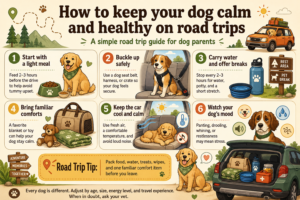
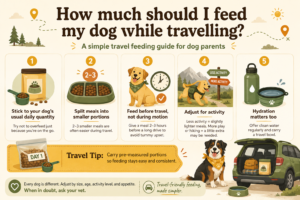
A Practical Travel Feeding Plan
For most dogs, this works well:
Before travel:
Feed a light meal 3–4 hours before leaving.
During travel:
Avoid feeding large meals while the vehicle is moving.
During breaks:
Offer small portions of wet food and fresh water.
After reaching:
Give the remaining meal once your dog has settled.
Backup:
Carry dry food or treats for delays and emergencies.
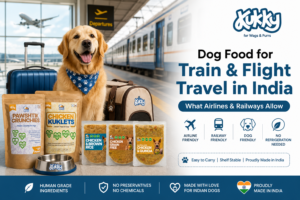
Why Kukky Wet Food Works Well for Travel
Kukky meals are made keeping modern Indian pet parents in mind.
They are:
- Human-grade
- Retort-packed
- Ready-to-eat
- Travel-friendly
- Shelf-stable
- No refrigeration needed until opened
- Made with real ingredients
- Easy to serve anywhere
Whether you are going for a road trip, weekend getaway, hotel stay, pet boarding, or simply need emergency backup food, Kukky meals make feeding easier.
No cooking.
No guesswork.
No messy meal prep.
Just cut, open, and serve.
Final Verdict
If you want the most convenient, hydrating, and comforting meal option for your dog during travel, wet food is usually the better choice.
If you want something lightweight and easy to store for backup, dry food is useful too.
But for dogs who get fussy, drink less water, or need a proper ready-to-eat meal while travelling, wet food has a clear advantage.
Because travel is already a big change for your dog.
Their food should feel familiar, simple, and comforting.