
How Much Should I Feed My Dog While Travelling?
Travelling with your dog sounds exciting until one very practical question hits you:
“How much food should I actually carry and feed during the trip?”
Too much food can make your dog uncomfortable, nauseous, or restless during travel. Too little food can leave them hungry, low on energy, or cranky. The right answer depends on your dog’s routine, age, activity level, travel duration, and whether your dog gets motion sickness.
The simple rule is this:
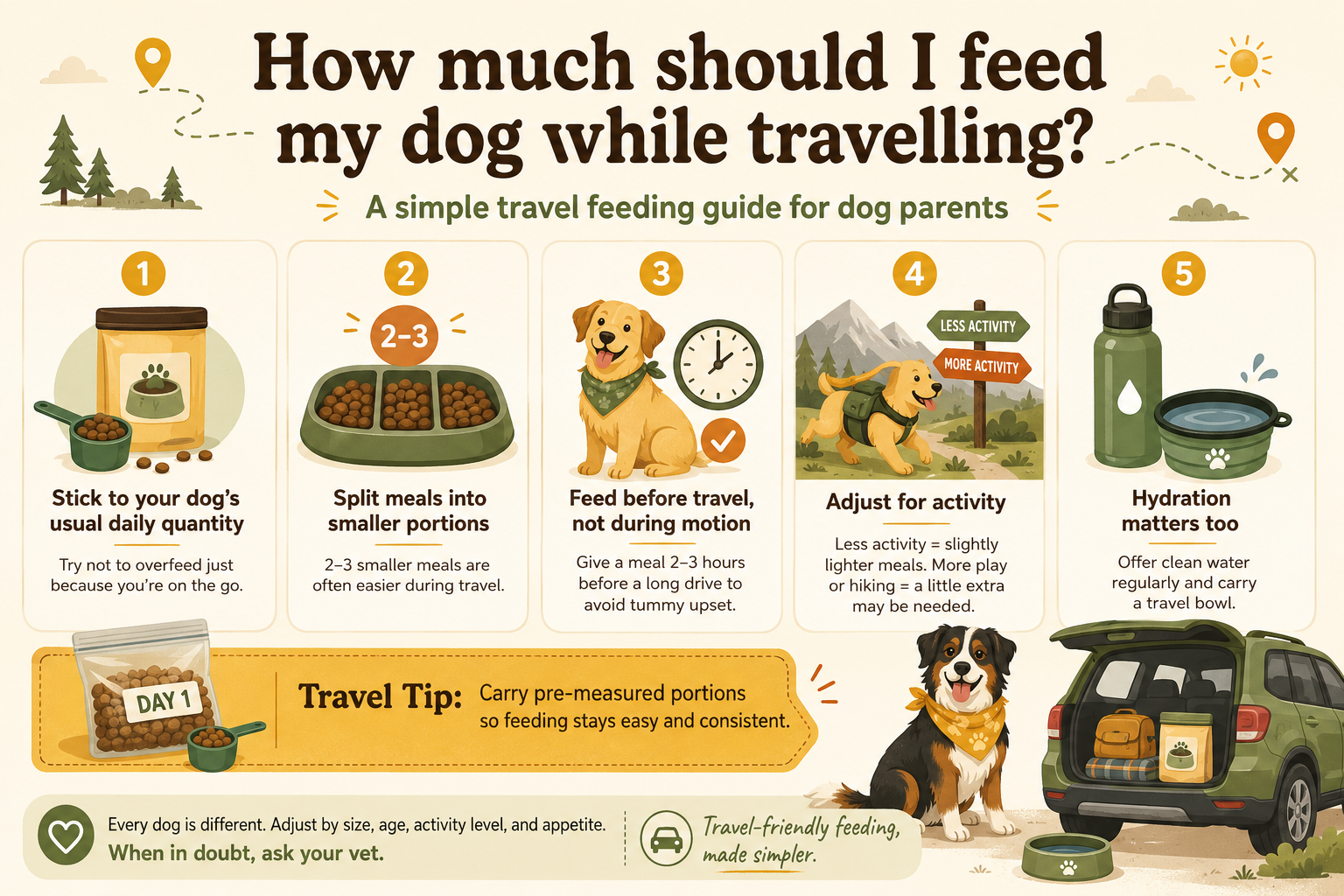
While travelling, don’t suddenly increase your dog’s food. Keep the total daily quantity close to their regular feeding amount, but divide it into smaller, lighter meals.
Should I Feed My Dog Before Travelling?
Avoid feeding your dog a heavy meal right before travel.
A full stomach during a car ride can increase the chances of nausea, drooling, vomiting, and discomfort. The American Kennel Club recommends feeding lightly before a car trip, around one-third of the normal amount, especially for dogs prone to motion sickness. VCA Hospitals also notes that withholding food for up to 8 hours before travel may help reduce nausea in some dogs, as long as it is not stressful or unsafe for that dog.
A safer approach for most healthy adult dogs is:
Feed a light meal 3–4 hours before leaving.
This gives your dog time to digest before the journey begins.
How Much Food Should I Feed During Travel?
Your dog’s total food for the day should usually remain close to their normal daily quantity.
For example:
| Normal Daily Food Quantity | Travel Feeding Suggestion |
|---|---|
| 200g per day | Split into 2–3 smaller portions |
| 300g per day | Feed 75g–100g at a time |
| 400g per day | Feed 100g–150g in small breaks |
| 600g per day | Divide into 3–4 meals across the day |
The goal is not to reduce nutrition. The goal is to make digestion easier during movement.
Best Feeding Schedule for a Road Trip
Here is a simple travel-day feeding routine:
Before leaving:
Give a light meal 3–4 hours before travel.
During the journey:
Avoid feeding while the vehicle is moving. WebMD advises stopping to feed your dog instead of feeding inside a moving car.
During breaks:
Offer small portions of food and fresh water.
After reaching:
Feed the remaining portion once your dog has rested and settled.
This helps prevent stomach upset and keeps your dog calmer during the journey.
What If My Dog Gets Car Sick?
Some dogs feel nauseous during travel, especially on long drives or winding roads.
Signs of travel sickness may include:
- Excessive drooling
- Lip licking
- Restlessness
- Whining
- Vomiting
- Refusing food
- Looking dull or anxious
For dogs with motion sickness, avoid large meals before the trip. A lighter stomach can make travel easier. However, puppies, senior dogs, diabetic dogs, and dogs with medical conditions should not be fasted without veterinary advice.
If your dog vomits on almost every trip, speak to your vet before your next journey.
Should I Give Treats While Travelling?
Treats are okay, but keep them limited.
During travel, treats should not replace meals or become a way to constantly distract your dog. Too many treats can upset digestion, especially when your dog is already anxious or moving in a car.
Use treats only during stops, not while the vehicle is moving.
Don’t Forget Water
Food is important, but hydration matters even more while travelling.
Always carry:
- Fresh drinking water
- A travel bowl
- Extra water for hot weather
- Wet food or moisture-rich meals
- Napkins and cleaning supplies
Offer small amounts of water during breaks. Avoid forcing your dog to drink too much at once, especially right before getting back into the car.
Why Wet Food Works Well During Travel
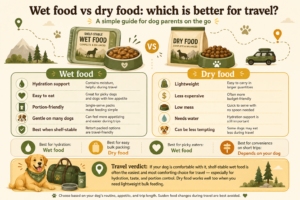
Wet food can be a practical option while travelling because it is easier to serve, moisture-rich, and often more appealing for dogs who become fussy outside home.
Kukky’s retort-packed wet meals are especially travel-friendly because they are:
- Ready to eat
- Shelf-stable
- Easy to carry
- No cooking required
- No refrigeration needed until opened
- Made with real, human-grade ingredients
- Convenient for road trips, hotel stays, boarding, and weekend getaways
You just cut, open, serve, and your dog gets a proper meal without the hassle of cooking or carrying bulky food containers.
How Much Extra Food Should I Carry?
Always carry more than the exact requirement.
A good rule is:
Carry your dog’s regular food quantity + 20–30% extra.
This helps in case of:
- Travel delays
- Sudden hunger
- Spillage
- Change in plans
- Extended stays
- Food not being available nearby
For example, if your dog eats 300g per day and you are travelling for 3 days, you need 900g food minimum. Carry around 1.1kg–1.2kg to stay safe.
Quick Travel Feeding Checklist
Before travelling with your dog, pack:
- Regular dog food
- Extra 20–30% food
- Travel bowl
- Fresh water
- Feeding mat or napkin
- Treats in limited quantity
- Poop bags
- Any medicines your dog needs
- Vet-prescribed anti-nausea medicine, if required
Final Answer: How Much Should You Feed?
Feed your dog almost the same total daily quantity they normally eat, but divide it into smaller meals during travel.
Avoid heavy meals right before the journey. Feed a light meal 3–4 hours before departure, offer small portions during breaks, and complete the remaining meal after reaching your destination.
Travel can already be overwhelming for dogs. Keeping their food simple, familiar, and easy to digest helps them stay calmer, happier, and healthier on the way.
Because a good trip starts with a comfortable tummy.