
You’ve probably seen it happen.
The constant scratching.
The red patches under the fur.
The nonstop paw licking that keeps both of you awake at night.
It’s tough to watch your dog struggle like this. And if you’re feeling worried or frustrated, you’re not alone.
Skin allergies are becoming increasingly common in dogs across India, and one of the biggest reasons is something most pet parents don’t suspect at first: what’s in their food bowl.
The good news? Unlike dust or pollen allergies, food-related allergies are something you can control. With the right diet, many dogs start showing improvement within just a few weeks.
Let’s break it down simply—what to feed, what to avoid, and how to help your dog feel better.
If you are looking for homestyle dog food, shop with Kukky Pet World.
Signs Your Dog Has a Food-Related Skin Allergy
Before changing the diet, it helps to understand whether you’re dealing with a food allergy or something environmental. Here are the key signs that food is likely the trigger:
- Persistent scratching — especially around the face, paws, ears, armpits, and groin
- Recurring ear infections — a hugely underappreciated sign of food sensitivity in dogs
- Red, inflamed skin — particularly on the belly and inner thighs where fur is thin
- Excessive paw licking or chewing — often leaving reddish-brown staining on the paws from saliva
- Dull, dry coat with flaking or dandruff despite regular grooming
- Chronic digestive issues alongside skin problems — loose stools, gas, or vomiting
- Year-round symptoms — environmental allergies tend to be seasonal; food allergies are usually constant
| Important: When to see a vet If your dog’s skin is broken, infected, or bleeding — or if symptoms are severe — consult a vet before making dietary changes. Dietary intervention works best alongside proper diagnosis. Ask your vet about an elimination diet trial to confirm food allergies. |
The Most Common Food Triggers in Indian Dogs
Not all skin allergies are caused by the same thing. But across thousands of allergy cases, certain ingredients come up again and again as the most common dietary triggers in Indian dogs:
| Common trigger | Why it causes problems |
| Wheat & gluten | Most common allergen in Indian dogs fed standard kibble. Causes gut inflammation that manifests as skin issues. |
| Corn & maize | Used as cheap filler in most budget dog foods. High omega-6 content worsens skin inflammation. |
| Soy protein | Common in vegetarian or budget formulations. One of the top 8 canine allergens globally. |
| Artificial preservatives (BHA, BHT) | Linked to immune system disruption and chronic skin inflammation in sensitive dogs. |
| Artificial colours & flavourings | Serve no nutritional purpose — purely cosmetic. Trigger histamine responses in many dogs. |
| Low-quality ‘meat meal’ | Rendered from unspecified animal parts. Inconsistent protein sources confuse the immune system. |
| Dairy (in some dogs) | Lactose intolerance is common in dogs. Can cause skin flare-ups in combination with other triggers. |
Notice what most of these have in common: they’re ingredients found in cheap, heavily processed commercial dog food. The more processed the food, the higher the allergen load. This is why switching to a clean-ingredient, grain-free diet resolves symptoms in many dogs — often within a few weeks.
Why Grain-Free Dog Food Helps with Skin Allergies
‘Grain-free’ has become a buzzword in the pet food world — but for dogs with skin allergies, it’s not marketing. It’s medicine.
Grains — particularly wheat, corn, and barley — are some of the most common food allergens in dogs. When a dog’s immune system identifies a grain protein as a threat, it mounts an inflammatory response. That inflammation doesn’t stay in the gut. It travels. And one of the most common places it shows up is the skin.
Removing grains from the diet reduces the total inflammatory load on your dog’s immune system. Combine that with a clean protein source (boneless chicken, lamb), omega-rich fats (flaxseed, olive oil), and functional vegetables (pumpkin for gut health, sweet potato for vitamin C) — and you have a diet that actively supports the skin from the inside out.
| The omega-3 connection Omega-3 fatty acids (found in flaxseed, fish oil, and quality oils) are anti-inflammatory. A dog with chronic skin allergies is almost always deficient in omega-3. Feeding a diet rich in flaxseed and quality plant oils can visibly improve skin and coat condition within 4–6 weeks. |
Best Ingredients for Dogs with Skin Allergies in India
When choosing or evaluating food for a dog with skin allergies, look for these ingredients specifically. Each one has a role to play in calming inflammation and rebuilding skin barrier health:
Proteins — choose single, named sources
- Boneless chicken — highly digestible, low-allergen when not over-fed; ideal for elimination diets
- Lamb — a novel protein for most Indian dogs; excellent choice when chicken is a suspected trigger
- Fish (salmon, sardines) — naturally high in omega-3; double benefit of protein + anti-inflammatory fats
Carbohydrates — low-glycaemic, grain-free
- Sweet potato — gentle on the gut, high in vitamin C and beta-carotene, anti-inflammatory
- Pumpkin — the single best ingredient for gut health; reduces the inflammatory gut-skin connection
- Karnataka ragi — a uniquely Indian superfood; gluten-free, high in calcium, gentle on sensitive systems
Fats — anti-inflammatory sources
- Flaxseed — the most practical plant-based omega-3 source; directly reduces skin inflammation
- Olive oil — oleocanthal has proven anti-inflammatory properties comparable to ibuprofen in studies
- Sunflower oil — rich in linoleic acid, essential for maintaining the skin’s moisture barrier
Functional additions
- Turmeric — curcumin reduces histamine response and skin inflammation; a traditional Indian ingredient with real science behind it
- Taurine — essential amino acid that supports skin cell regeneration and immune function
What to Avoid Feeding a Dog with Skin Allergies
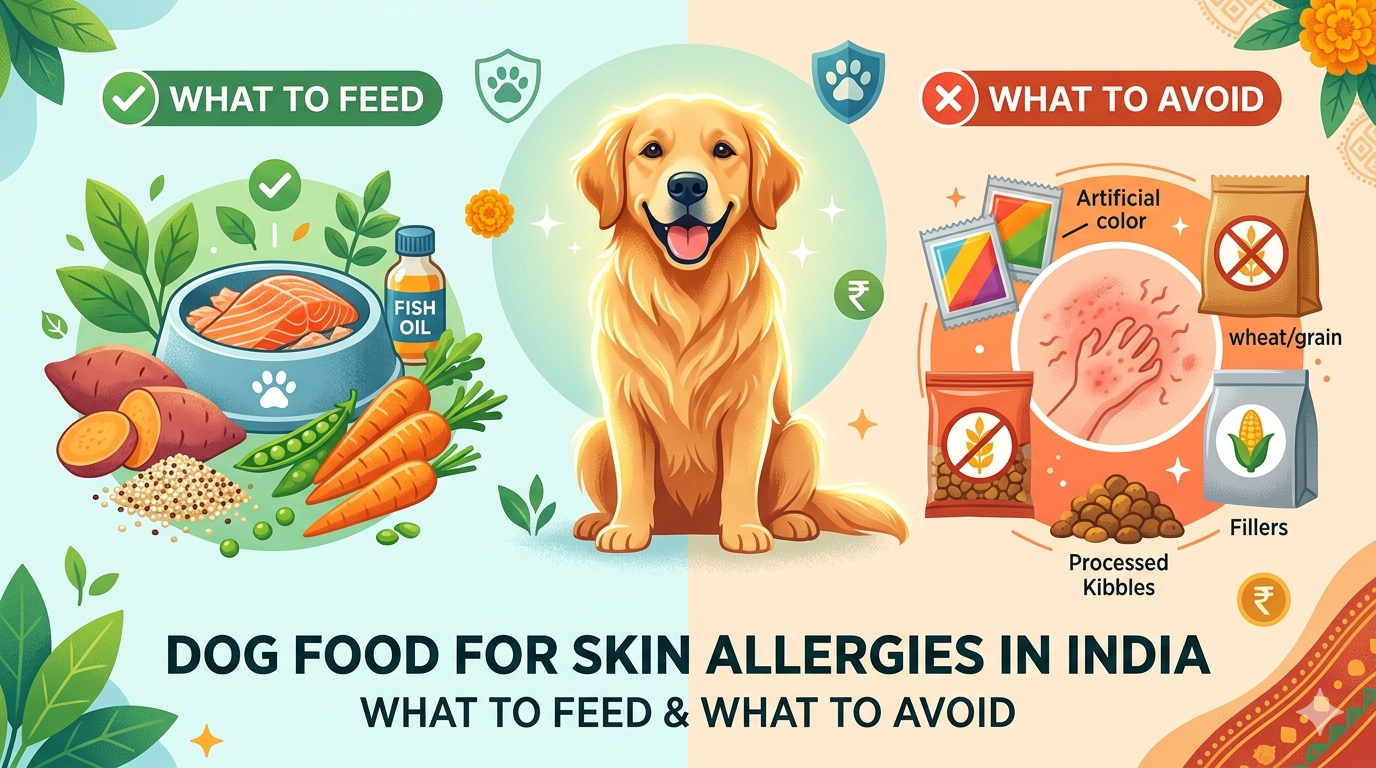
| Ingredients to remove from your dog’s diet immediately Wheat, gluten, and grain-based fillers — most common trigger for skin reactions Corn, maize, and soy — inflammatory omega-6 heavy fillers with no skin benefit BHA, BHT, ethoxyquin — artificial preservatives linked to immune disruption Artificial colours and flavours — zero nutrition, high allergen risk ‘Meat meal’ and ‘poultry by-product’ — inconsistent, low-quality protein sources High-sodium foods — excess salt worsens skin inflammation and dehydration Onion and garlic (toxic to dogs regardless of allergies) Dairy products if your dog shows lactose sensitivity |
How to Safely Transition Your Dog to an Allergy-Friendly Diet
Never switch dog food overnight — even healthy food can cause digestive upset when introduced too quickly. The standard transition method recommended by vets is the 7-day gradual transition:
- Days 1–2: 25% new food, 75% current food
- Days 3–4: 50% new food, 50% current food
- Days 5–6: 75% new food, 25% current food
- Day 7 onwards: 100% new food
For dogs with very sensitive stomachs, extend each stage to 3 days, making it a 12-day transition. During this period, monitor stool quality, energy levels, and the skin condition. Some dogs initially have slightly looser stools during transition — this is normal. If vomiting occurs, slow the transition further.
Expect to see skin improvement within 4–8 weeks of maintaining the new diet. Coat improvements typically show around week 6. Some dogs respond faster; others take up to 12 weeks. The key is consistency — every off-diet treat or meal resets the clock.
Kukky’s Recipes for Dogs with Skin Allergies
At Kukky, every recipe is formulated with skin health in mind — clean proteins, anti-inflammatory fats, zero artificial additives, and functional ingredients that actively support your dog’s skin and coat. Here are the recipes best suited for dogs with skin sensitivities:
Chicken Grain Free — best for most allergy-prone dogs
Kukky’s Chicken Grain Free meal is built specifically for dogs who thrive without grains. Premium boneless chicken and organ meats provide clean, single-source protein. Karnataka ragi replaces grains as the carbohydrate source. Flaxseed, olive oil, and sunflower oil deliver the omega-3 and omega-6 balance the skin needs. With 42% protein, zero grains, and 46 vitamins and minerals, this is the go-to recipe for dogs with known grain sensitivities or chronic skin issues.
| Chicken Grain Free — skin allergy benefits at a glance 42% protein from clean boneless chicken and organ meats Zero grains — ragi replaces wheat/corn/barley completely Flaxseed + olive oil + sunflower oil for optimal omega balance Turmeric for natural anti-inflammatory support 46 vitamins and minerals + taurine for complete skin nutrition kukkypetworld.com/product/chicken-grain-free/ |
Tender Lamb Grain Free — for dogs sensitive to chicken
If your dog has been on chicken-based food for a long time and is still showing allergy symptoms, chicken itself may be the trigger — not just grains. In that case, Kukky’s Tender Lamb Grain Free offers a novel protein your dog’s immune system hasn’t been exposed to before. Succulent lamb meat and organs, simmered in lamb broth, with pumpkin, sweet potato, and Shimla apples. At 50% protein with 6% carbohydrates, this is an ultra-clean, low-carb option ideal for dogs with multiple food sensitivities.
Internal link: kukkypetworld.com/product/tender-lamb-grain-free/
Pawshtik Crunchies — a joint-healthy treat that won’t trigger reactions
Even treats matter during an allergy protocol. Kukky’s Pawshtik Crunchies are made from chicken feet — grain-free, gluten-free, chemical-free, and naturally rich in collagen and calcium. They’re the rare treat you can give confidently during an elimination diet. The 50%+ protein content and zero grain formulation make them the safest snack for allergy-prone dogs.
Internal link: kukkypetworld.com/product/pawshtik-crunchies/
Quick Reference: Allergy Diet Checklist
| Feed these — skin-friendly ingredients | Avoid these — common allergy triggers |
| Boneless chicken or lamb (named protein) | Wheat, corn, soy, barley (grain fillers) |
| Pumpkin and sweet potato (gut health) | Artificial preservatives (BHA, BHT) |
| Flaxseed and olive oil (omega-3) | Artificial colours and flavours |
| Ragi (gluten-free Indian superfood) | ‘Meat meal’ or ‘poultry by-product’ |
| Turmeric (natural anti-inflammatory) | Onion, garlic (toxic) |
| 46 vitamins and minerals (complete nutrition) | High-sodium or highly processed foods |
Frequently Asked Questions
How long before I see improvement in my dog’s skin after changing food?
Most dogs show noticeable improvement within 4–8 weeks of consistently following an allergy-friendly diet. Coat improvement typically comes slightly later — around 6–8 weeks. Some severely allergic dogs may take up to 12 weeks. The key is strict dietary consistency — every deviation can restart the inflammatory cycle.
My dog has been on chicken all its life — can chicken be the allergen?
Yes, absolutely. Prolonged exposure to the same protein is one of the main causes of food allergies in dogs. The immune system can develop a sensitivity to any protein over time. If your dog has been on chicken-based food for 2+ years and still has skin issues despite removing grains, switching to a novel protein like lamb is the recommended next step.
Is grain-free food safe long-term for dogs?
The short answer is yes, when properly formulated. The concern about grain-free diets and DCM (dilated cardiomyopathy) relates specifically to diets high in legumes (peas, lentils) as the primary carbohydrate — not to grain-free diets in general. Kukky’s grain-free recipes use ragi and vegetables as carbohydrate sources — no legume loading — making them safe for long-term feeding.
Can I feed my dog homemade grain-free food instead?
You can, but it’s harder to get right than it sounds. Homemade grain-free food for dogs requires precise supplementation — especially calcium, omega-3 fatty acids, zinc, and taurine — all nutrients that are naturally depleted in unsupplemented home cooking. A properly formulated ready-made option like Kukky’s grain-free range delivers the same clean ingredients with the nutritional completeness already built in.
Ready to Help Your Dog’s Skin? Start Here.
If your dog is scratching, licking, or dealing with chronic skin irritation — their food is the first place to look and the easiest place to act. The right diet won’t just reduce symptoms. It will rebuild your dog’s skin from the inside, improve coat quality, boost energy, and reduce vet bills over the long term.
Kukky’s grain-free range is made with exactly the ingredients your dog’s skin needs — and absolutely none of the triggers that make allergies worse. Real chicken or lamb, functional vegetables, anti-inflammatory oils, zero grains, zero fillers, zero artificial anything.
| Try Kukky for your dog’s skin allergies Chicken Grain Free (42% protein, zero grains, omega-rich fats) kukkypetworld.com/product/chicken-grain-free/ Tender Lamb Grain Free (50% protein, novel protein for persistent allergies) kukkypetworld.com/product/tender-lamb-grain-free/ Free shipping on all orders. COD available. Pan-India delivery. Starting from ₹110 for a 100g pack. Subscribe via WhatsApp for monthly savings. Questions about which recipe is right for your dog? WhatsApp us at +91-8770957644 — we’ll help you choose. |